Agentic systems don’t stop where marketing ends. They cut across sales handoffs, ops workflows, data pipelines, and product feedback loops, and they inherit every broken boundary they touch. Designing them takes someone who has actually run those functions, not just presented to them.
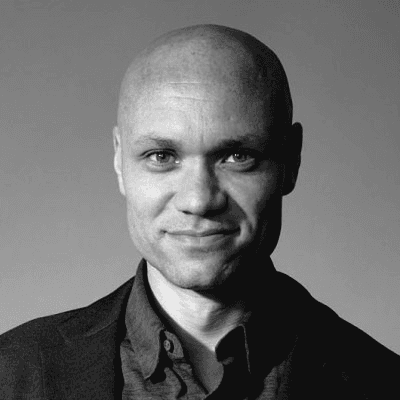
I’m Brandon Young, founder of Ohashi. For nearly three decades I’ve built, scaled, and advised marketing, sales, operations, and R&D teams inside high-growth, high-performance companies: from 50 employees to 5,500, from $20M in revenue to over $1B, across healthcare, retail, manufacturing, fintech, construction tech, revenue tech, and the nonprofit world.
The same bind showed up in every seat. GTM teams have to serve the long term and the short term at once, with almost no room for error. And that’s the trap, because error is how teams actually learn. The ones that adapt and thrive are the ones that can afford to be wrong, recover fast, and bank the lesson. Most teams never get that room.
AI changes the math. Teams can now iterate faster than the clock counts down, and being wrong gets cheaper by the quarter. But speed only compounds into advantage if the learning lands somewhere: a centralized machinery that captures what worked, remembers what didn’t, and creates the space for strategic bets that build reliability over time. That became the specialty: GTM strategy design, operational systems, and the change management that makes them stick.
I’ve worked both sides of the table: as an operator owning the full funnel in B2B and B2C, and as an advisor and consultant to CEOs and GTM leaders. I’ve been working with AI since 2018, long before the mandate had a name, and I’ve taught GTM strategy, planning, and operations to thousands of executives through professional networks and educational institutions. The systems hold up when other operators run them.
Ohashi exists to build that machinery.